
Home/Our Services
Dental Implants
Dr. Warga places dental implants here in our Winnetka office. Each one is planned on a 3D scan taken in the office, and he designs the crown that goes on it. For missing, damaged or severely decayed teeth, an implant gives you a natural-looking replacement that improves your oral health and the appearance of your smile.
Why Dental Implants?
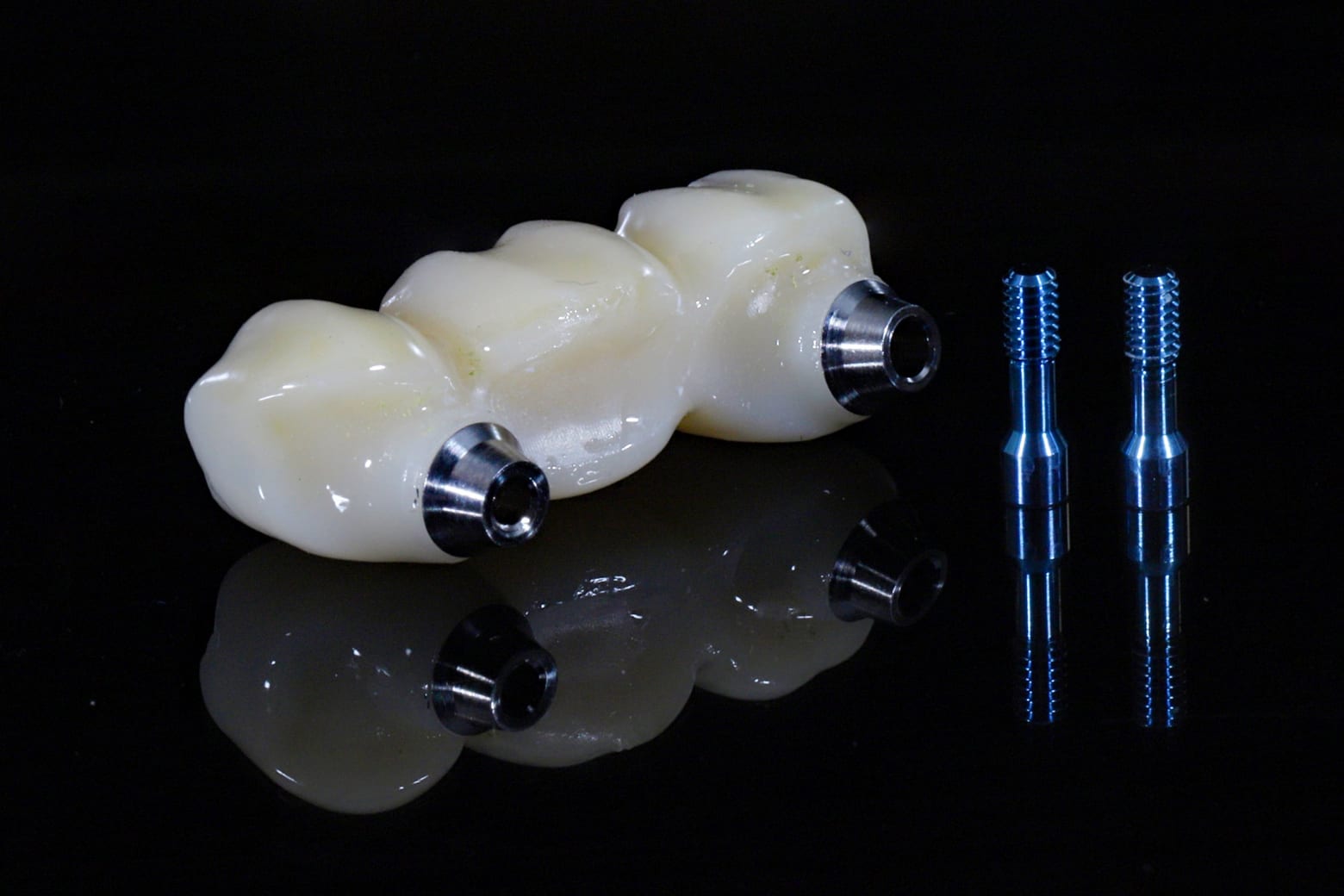
Dental implants can be used to replace a single tooth or multiple missing teeth. In many cases, patients will have dental implants to support a fixed restoration, such as a crown or bridge. However, they can also be used to support removable devices like dentures. These devices boast a high approval rating with our patients, as these restorations look and feel just like your natural teeth! As a result, you will be able to eat, speak, and smile with more confidence.
The procedures that often go with an implant are done here too, by Dr. Warga himself: extractions, bone grafting and platelet-rich fibrin (PRF). In select cases we may refer you to a specialist we work in partnership with, and we coordinate your care with them. No matter what type of restorative dentistry you are looking for, we can help you restore your oral health through veneers, dental implants, or any other type of dental work you are looking for. We offer state-of-the-art technology to create a seamless procedure to replace your missing or damaged teeth and restore your oral health.
Planned in 3D, Guided into Place
Before an implant is placed, we take a 3D cone beam (CBCT) scan here in our office. It shows the bone, the nerve canals and the neighboring teeth in three dimensions. On that scan, the position, angle and depth of each implant are planned before the day of your surgery, and during the procedure that plan guides the placement.
In clinical studies, implants placed with computer guidance sit closer to their planned position than implants placed freehand. That accuracy matters most where there is little room: near a nerve, a sinus or the root of a neighboring tooth.
Bone Grafting
An implant needs enough bone around it. After a tooth is removed, the bone that held it begins to shrink. Bone graft material placed in the socket at the time of the extraction can help the ridge keep its width and height, and where bone has already been lost, grafting can rebuild enough of it to hold an implant. Dr. Warga performs bone grafting in our office.
Clinical studies report that implants placed in grafted bone hold up about as well as implants placed in a patient’s own bone. Grafting does take time. A larger graft may need several months to heal before it can support an implant; a small one can sometimes be placed at the same visit as the implant.
Platelet-Rich Fibrin (PRF)
PRF is made from a small sample of your own blood, taken at your appointment and spun in a centrifuge. What comes out is a soft clot that holds your platelets and the proteins your body uses to heal. Dr. Warga uses PRF to help a site heal, often followed by a bone graft to prepare the site for an implant.
In clinical trials, extraction sites treated with PRF showed better healing of the gum and fewer cases of dry socket. Its effect on bone is still being studied.
The Crown on Your Implant
The crown that goes on your implant gets the same attention as every restoration we place. Dr. Warga designs it, and it is made by dental laboratories chosen for their materials and craftsmanship.
Our Implant Dentistry Services
Our team works closely with you to determine if dental implants are the best treatment for you. Every patient is different, and therefore the amount of time required for the dental implant procedure can vary from patient to patient. In the meantime, we will make every effort to maximize your comfort, aesthetic quality, and occlusal function throughout the transition from missing teeth to your permanent replacement. We provide advanced technology and a comfortable atmosphere to make your implant surgery as seamless as possible.
Here’s what you can expect throughout the process of your dental implants procedure:
- First, your dentist will work with you to determine if this procedure is right for you during your initial consultation.
- Your dentist will then use a local anesthetic to keep you comfortable throughout the procedure.
- If applicable, Dr. Warga will first remove the unhealthy tooth.
- Dr. Warga will make an incision into the gum to expose the bone.
- Dr. Warga will drill holes into the bone and then place the dental implant deep into the bone.
- To ensure the long-term success of dental implants, 3D cone beam (CBCT) imaging is used to identify sites for implant placement.
- We will implement state-of-the-art CAD-CAM technology and computer guidance to help determine treatment solutions.
- Prototypes of the restorations are made in advance so you can experience the final design before the placement of the permanent restorations.
- Once the surgical site is completely healed, the permanent restorations will be set into place.
We pride ourselves on the quality of our patient care. We will carefully walk you through every step of your treatment process, so you feel comfortable and secure throughout your procedure or implant surgery. We wish to make absolutely certain that you are happy with your new smile.
To take the first step in getting your dental implants, call or text us today to book your consultation!
Questions About Dental Implants
Have a question that is not here? Call or text us at (847) 441-6510.
Does Dr. Warga place the implant, or do I need an oral surgeon?
Dr. Warga does, in our office. He also performs the procedures that often go with an implant: extractions, bone grafting and platelet-rich fibrin (PRF). When a case calls for a specialist, we work in partnership with periodontists and oral surgeons to place the implant and with oral surgeons for extractions. We coordinate your care with them.
What is guided implant placement?
Before an implant is placed, we take a 3D cone beam (CBCT) scan here in our office. On that scan, the position, angle and depth of each implant are planned before the day of your surgery, and during the procedure that plan guides the placement. In clinical studies, implants placed with computer guidance sit closer to their planned position than implants placed freehand.
Will I need a bone graft?
An implant needs enough bone around it, and after a tooth is removed the bone that held it begins to shrink. Bone graft material placed in the socket at the time of the extraction can help the ridge keep its width and height, and where bone has already been lost, grafting can rebuild enough of it to hold an implant. The 3D scan shows the bone at the site.
How long does it take to get a dental implant?
It varies from patient to patient. A larger bone graft may need several months to heal before it can support an implant; a small one can sometimes be placed at the same visit as the implant. The permanent restoration is set into place once the surgical site is completely healed.
What is PRF?
Platelet-rich fibrin (PRF) is made from a small sample of your own blood, taken at your appointment and spun in a centrifuge. Dr. Warga uses PRF to help a site heal, often followed by a bone graft to prepare the site for an implant. In clinical trials, extraction sites treated with PRF showed better healing of the gum and fewer cases of dry socket. Its effect on bone is still being studied.
Can implants replace more than one tooth?
Yes. Dental implants can replace a single tooth or several missing teeth. They can support a fixed restoration, such as a crown or a bridge, and they can also support removable devices like dentures.